




Do you own a garden or allotment and are looking for advice on how to properly care for your lawn? Are you wondering what maintenance treatments should be carried out systematically and if you can handle them yourself? You can certainly perform many actions yourself. A handful of basic tips can be found in our article, which will help you get started with your lawn care routine. Of course, in case of more serious problems, professional help may be useful. When? You’ll find out from the text!
Where to start?
Choosing seeds? Mowing? Fertilisers? Many people think that these are what they should start with when caring for their lawn. Meanwhile, the truth lies deeper, literally. Beautiful grass is possible thanks to the substrate in which seeds can germinate and develop. It’s obvious that you don’t need weeds and pests in your soil, but have you ever wondered what quality of soil grass needs to grow?
The ideal soil for grass is slightly acidic (minimum 5.5 pH), permeable, and rich in organic matter. You cannot assess its condition yourself, especially whether it contains all nutrients in the right proportions. A simple and comprehensive soil test is enough, after which you will receive a report in PDF format on your phone. Only then plan fertilisation – before that, you won’t know what will work for your lawn.
DIY lawn care
In fact, fertilising an average lawn only takes just a few minutes of work once per season. You can tailor the care to the specific needs of the lawn or choose ready-made fertilisers, e.g., for use in early spring or in autumn, at the end of the season. Ready-made fertiliser mixtures are a practical and convenient solution, and their carefully balanced formula should meet the needs of most lawns. If you need comprehensive information on lawn fertilisation, you will find it in our article.
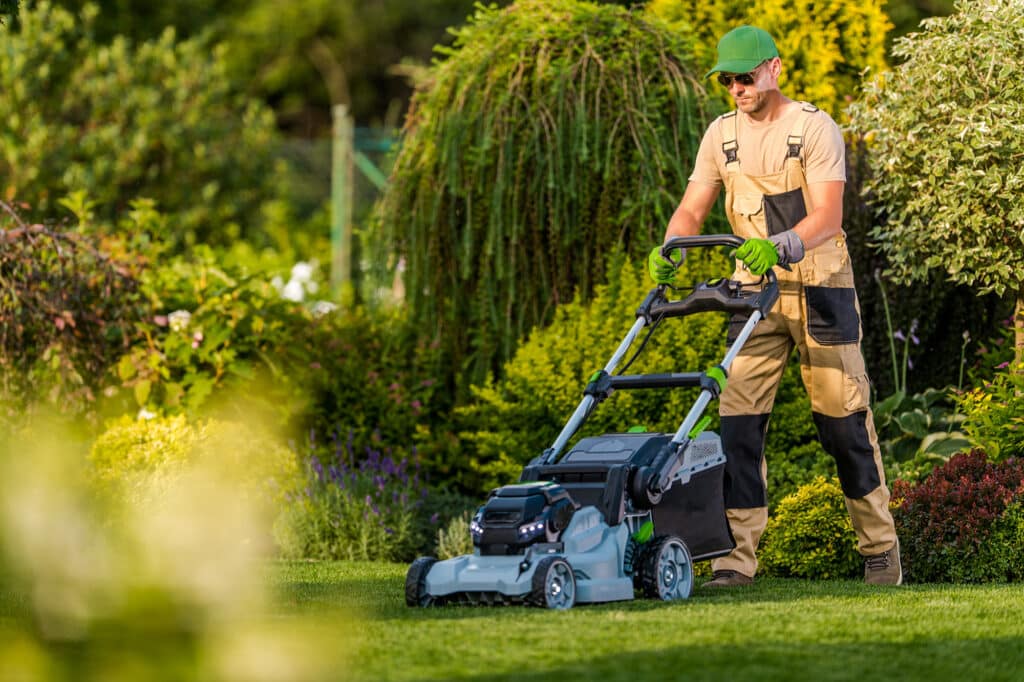
Fertilisers will be best absorbed if preceded by aeration and soil scarification. The simplest garden aerators cost several hundred zlotys and resemble a regular lawnmower. Even cheaper are shoe attachments with spikes on the soles, which will help loosen the soil. This is, of course, a solution that will only work if you have a small lawn (up to about 50 square metres). You can also mow the grass yourself. The first spring mowing will stimulate the blades to grow, and each subsequent one will allow you to maintain the lawn at an optimal height. Wondering what is the ideal blade length? Check it out!
When to take care of the lawn with the help of a professional?
How to care for your lawn – hire a professional or do it yourself? In fact, you can independently deal with many common lawn problems. It is worth seeking help if:
- The lawn is developing diseases, and you don’t know what the problem is.
- You have a very large area and you can’t take care of it yourself;
- There are holes and unevenness in the lawn – discolouration, ruts, molehills.
If you need advice, contact our specialists.