




Healthy, strong and well-maintained grass is the goal that most lawn owners strive for. Unfortunately, various Pests & Diseases often stand in the way. Therefore, it is worth finding out what threatens your lawn and learning ways to combat existing problems. Remember, however, that the best way to deal with Pests & Diseases is correctly carried out care and lawn feeding. If you take good care of it from the very start, the chances of problems with the grass occurring drop significantly!
Pests
Grubs
This is the larval form of the beetle, reaching adulthood after 4 years. They are quite large (around 3–4 cm), thick and white, curved in a C-shape. They live in the soil and feed on roots and decaying plant remains. For this reason, they are among the worst Pests & Diseases. A sign that the lawn has been attacked by them is local yellowing of the lawn, rapid wilting of newly planted plants and loose turf that easily pulls away from the soil.
Controlling grubs is not easy, as the effects of their activity are not visible immediately. In fact, the best way to prevent the turf from being destroyed by them is proper lawn care, including treatments such as aeration and scarification . Ultimately, prevention is better than cure! However, if this pest appears on your lawn, you should reach for an appropriate grub control product. In the first instance, use an eco-friendly preparation. If that does not help, only then reach for chemical agents.
Crane fly
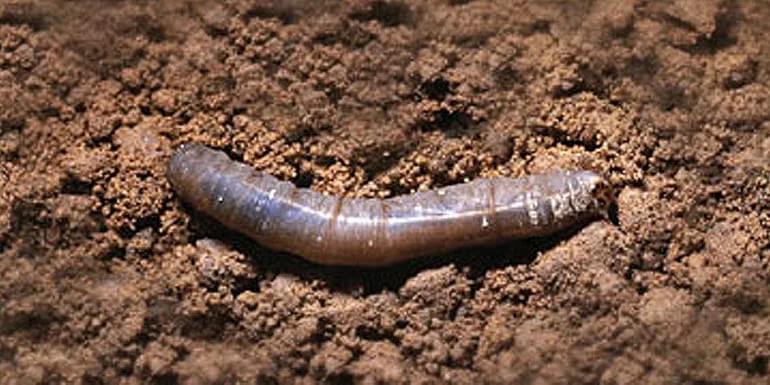
Leatherjackets are the larval stage of the crane fly, which can cause serious damage to grass. They are legless, brown or grey, and can reach up to 4 cm in length. Once sexually mature, females lay their eggs in early autumn. The larvae are active from the beginning of September, causing damage during the winter and early spring.
If we do not control leatherjacket larvae, they can completely destroy the lawn. They feed on grass stems and roots, so infested plants die off. Given the nature of grubs, damage is rarely uniform and is difficult to predict. A practical method to control them is to use an effective insecticide, especially if most of the grass roots are intact. In such a situation, the lawn can be recovered using basic maintenance treatments. Sometimes, however, it is necessary to sow new grass seed on the damaged surface.
Ants
They can be a real plague. Their presence is manifested by small mounds on the grass, and in places where their nests are located, the grass dies off. By creating tunnels in the root ball, they weaken the roots and dry out the soil. There are many home methods for ant control. You can plant your lawn with plants they dislike. These include, for example, lavender, thyme or marigold. You can also sprinkle their nests and travel routes with baking powder or bicarbonate of soda.
However, let’s be honest, such methods will not cope with a real ant invasion. In such cases, you should reach for professional products. The most important thing is to apply such a product to the centre of the colony, rather than to individual insects. After all, we must eliminate the centre of the problem, namely the egg-laying queen. You can choose a spray, granules or bait. The latter works best because even if you do not find the source of the problem, the workers will unknowingly carry the poison to the nest.
Diseases
Red thread
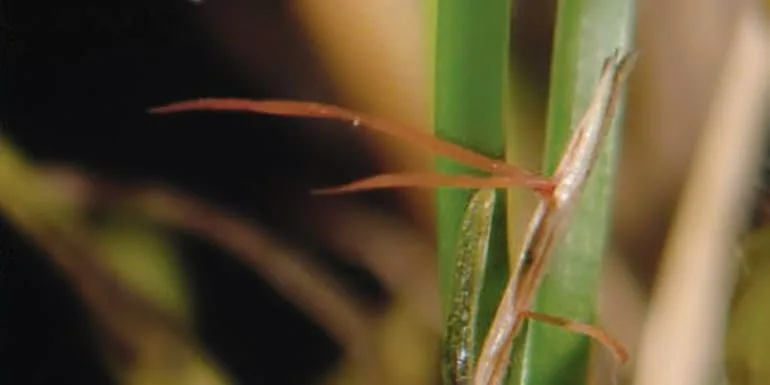
A common fungal disease, the first sign of which is patches of brownish rotting grass. When looking closer, you will see thin red needles protruding from the grass blades. In very bad cases, small particles of pink mycelium are visible, looking like small pieces of cotton wool. Red thread is a sign of high humidity or low fertility. It most often occurs in the summer months when humidity levels are very high. If it appears during a mild autumn, it can last throughout the winter. It does not usually spread from lawn to lawn, although it is best to hose down mower blades to remove any potential fungi.
As low fertility is one of its causes, we advise regular fertilising. Nevertheless, if the problem persists due to moisture, we recommend applying a lawn fungicide 2–3 weeks after feeding and weeding the lawn. It should deal with the disease within 2–3 weeks after application. If wet weather continues, red thread may reappear. Mowing the lawn with an inefficient mower or one with blunt blades can cause the disease to return.
Snow mould
This is another dangerous fungal disease that manifests as a white coating and moist, rotten patches. It can appear at temperatures a few degrees above zero, high humidity, and lingering snow cover. Its development is also influenced by poor preparation of the lawn for winter, particularly nitrogen over-fertilisation and an excessively high soil pH level. To combat it, you should perform lawn scarification and thoroughly rake out any remaining plant debris. It is also worth loosening the soil by subjecting it to aeration and top dressing with quartz sand.
To avoid snow mould in the next season, mow the turf low before winter and avoid walking on the snow cover lying on the lawn. Fertilisations should also be carried out “with a head”: be careful with nitrogen, but replenish deficiencies of other elements (especially potassium). To know which fertiliser doses are optimal for your lawn, it is worth carrying out a soil test.
Moss
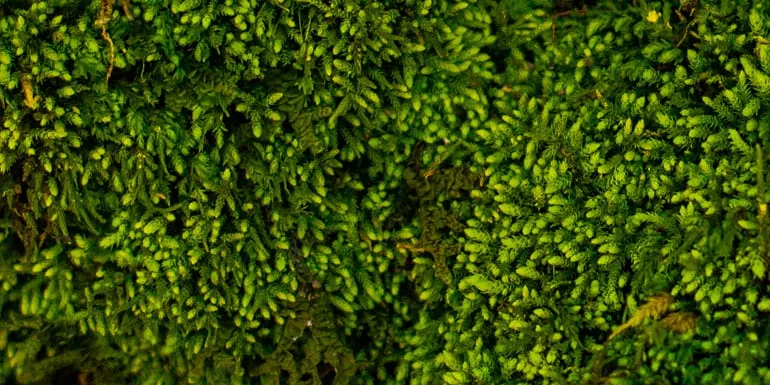
Moss thrives in damp and shaded areas. Lawns that have a heavy thatch layer, have been mown too short or grow on clayey soil are more prone to moss appearing. A good method for moss control is scarification. This treatment removes the accumulated thatch, which is one of the main causes of moss presence on the lawn. It provides significantly better results than raking, which only removes dead moss. This will not completely cure the lawn, nor will it bring any benefits regarding the removal of the causes of the disease.
If you create the right conditions, it is possible to achieve a reduction or even the complete disappearance of moss recurrence on the lawn. In practice, if the lawn is shaded by a house or trees, one does not usually aim for the complete removal of moss.
Above, we have presented only the most common Pests & Diseases of the lawn. Remember, however, that there are significantly more problems that can arise. Only correct identification will allow you to develop the best plan to combat them. However, we want to emphasise once again: correctly performed lawn care is the best preventive measure to ensure that Pests & Diseases of the lawn are forgotten!