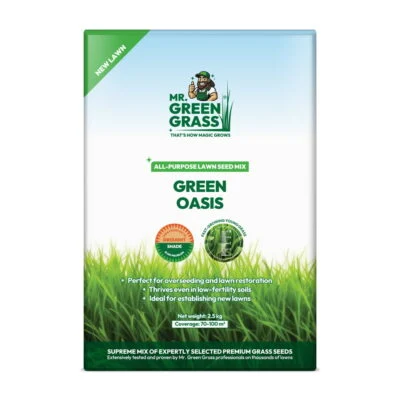

Just a few years after establishing a lawn, the turf’s natural ability to reproduce decreases drastically. Weak blades cannot cope with strong weeds and diseases. Therefore, annual overseeding is one of the best ways to maintain a compact, thick, and lush green lawn.
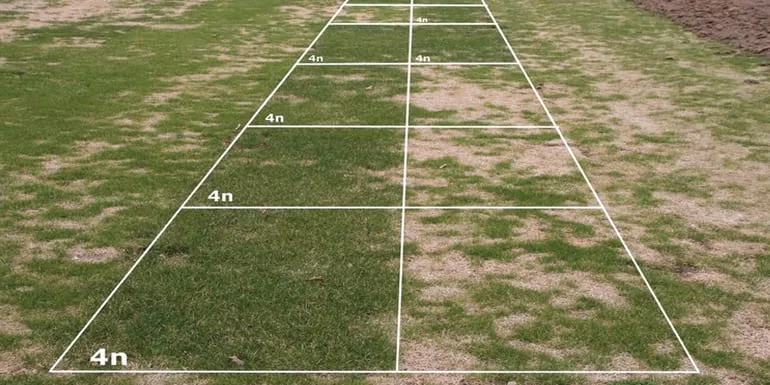
Thickening the lawn is a gardening procedure that involves sowing grass seed onto existing turf without digging it up. It is an easy way to fill in gaps in our lawn, improve its density, increase species diversity, and enhance colour. If your lawn looks old or ‘tired’, and fertiliser doses are becoming increasingly high or it is being attacked by diseases, it is an ideal candidate for this treatment. Regular overseeding compensates for the natural decline in the reproductive capacity of an old lawn. You will gain a range of benefits from this procedure. Your lawn will be beautiful, thick, and lush green. What’s more, thick grass defends itself more easily against weeds, provided you ensure the correct mowing height. Additionally, strong and healthy turf shows increased resistance to Pests & Diseases.
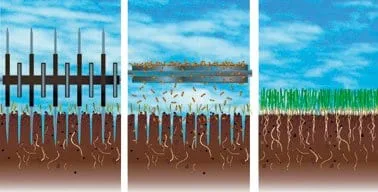
Uneven lawn – causes of the problem
An old lawn dies back or deteriorates for many different reasons. It also often happens that many older turfs consist of various grass species that are no longer used today. Usually, they are more susceptible to modern diseases and require more lawn feed. First, however, the entire problem of grass deterioration must be carefully analysed. Is the grass refusing to grow? This can be influenced by factors such as:
- An old lawn dies back or deteriorates for many different reasons. It also often happens that many older turfs consist of various grass species that are no longer used today. Usually, they are more susceptible to modern diseases and require more lawn feed. First, however, the entire problem of grass deterioration must be carefully analysed. Is the grass refusing to grow? This can be influenced by factors such as:
- poor soil conditions
- poor drainage
- poor lawn watering
- low in nutrients
- lack of nutrients
- poor aeration
- lack of sunlight
- incorrect grass seed mix
- general neglect.
A portion of fresh seeds will help us improve the appearance of thinning sections or fill in completely bare patches.
Benefits of lawn overseeding
The primary benefit of this procedure is filling in all kinds of gaps, thinning areas, and bare patches on the lawn. This will significantly increase the aesthetics of your garden. Sowing new grass seed and varieties increases the diversity of our lawn. As a result, it becomes more durable and resistant to Pests & Diseases and difficult conditions such as drought, frequent use, or shade. What’s more, correctly performed overseeding is one of the lawn care treatments that helps to fight moss.
When is the best time to deal with overseeding? The best time of year for this treatment is spring, when the sun is not yet too scorching. The lawn should be cleared after winter of all leaves, sticks, and the thatch layer. Therefore, overseeding is best carried out after mowing, scarifying, and aeration, as well as alongside top dressing. In this way, you will comprehensively look after the condition of the lawn so that it remains thick and beautiful throughout the season. You will forget about dried, thin, and damaged turf!
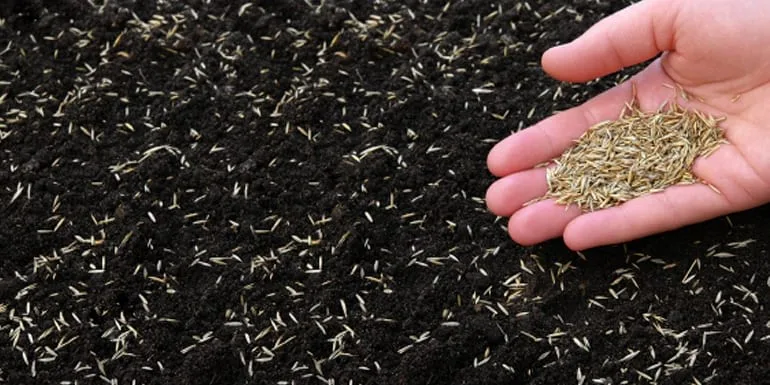
How to thicken your lawn?
The key to quickly thickening the lawn after overseeding is care and patience. Properly conducted overseeding will contribute to the health and beauty of our lawn. Additionally, it will contribute to its positive response to mowing, watering, and lawn feed application. Depending on the conditions and the seed mix, germination should begin after 14–21 days when there is appropriate soil moisture and temperature. The lawn will be ready after approximately 8–12 weeks.
Proper lawn watering is crucial in the process of correctly thickening the lawn. The basic rules for watering after overseeding are as follows:
1. A thorough watering immediately after overseeding, so that all seeds end up where they should be – it is best to wash the seeds in with a moderate stream of water from a spray gun, manually, spot by spot!
2. Until germination (14–21 days), water the seeds gently every day, moderately moistening the top layer of soil – approx. 2-3 cm.
2. Until germination (14–21 days), water the seeds gently every day, moderately moistening the top layer of soil – approx. 2-3 cm.
4. Once the lawn is established, water according to recommendations depending on the type of grass and weather conditions. Do you need specific advice on how to water your lawn? You can find it here!

Sports Lawn Seed Mix – Pro Performance – Mr. Green Grass®
£29,95
Self-Repairing Lawn Seed Mix – Patch Repair – Mr. Green Grass®
£24,95