




The maintenance treatment known as aeration involves piercing the turf with special spikes or hollow tines. It is also referred to as aerating. This maintenance procedure aims to loosen the soil and facilitate the root ball’s access to nutrients, among other things, which stimulates the grass blades to grow and increases the lawn’s elasticity. Lawn aeration is divided into two types, using different gardening tools. Are you wondering if your lawn requires aerating? Read this text and find out what benefits lawn aeration brings!
Types of aeration
Lawn aeration is a basic gardening treatment, which is divided into two types: deep and surface. The specific type of aeration is adapted to the condition and type of substrate. Surface aeration involves a shallow incision of the substrate, to a depth of about 3-4 cm. This type is carried out on young lawns, i.e. 2 years after establishing the lawn. Shallow aeration will also work for lawns in good condition, maintained correctly and not attacked by moss. Appropriate tools are often used: special shoes (usually spiked sandals, available in garden centres) or a roller. However, spiking the turf in this way involves a lot of work.
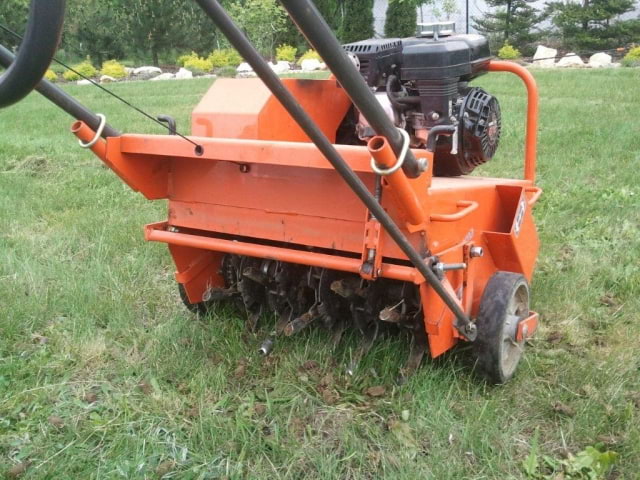
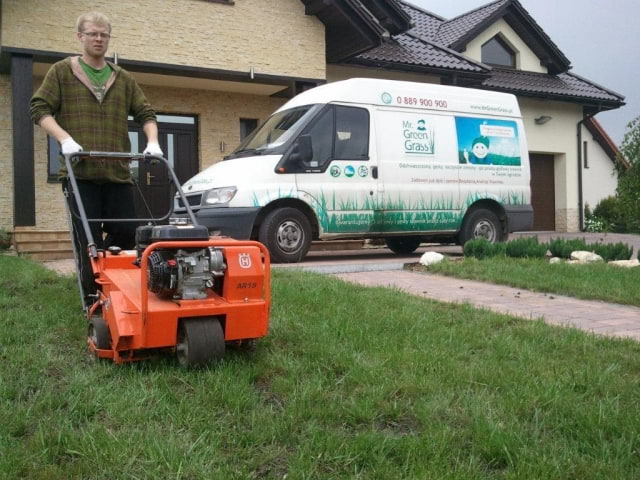
In contrast, deep aeration involves making holes with a depth of 8 cm to 10 cm. In this case, a mechanical aerator is used, which is able to make incisions in the turf at a greater depth than other tools.
Why does a lawn require aeration?
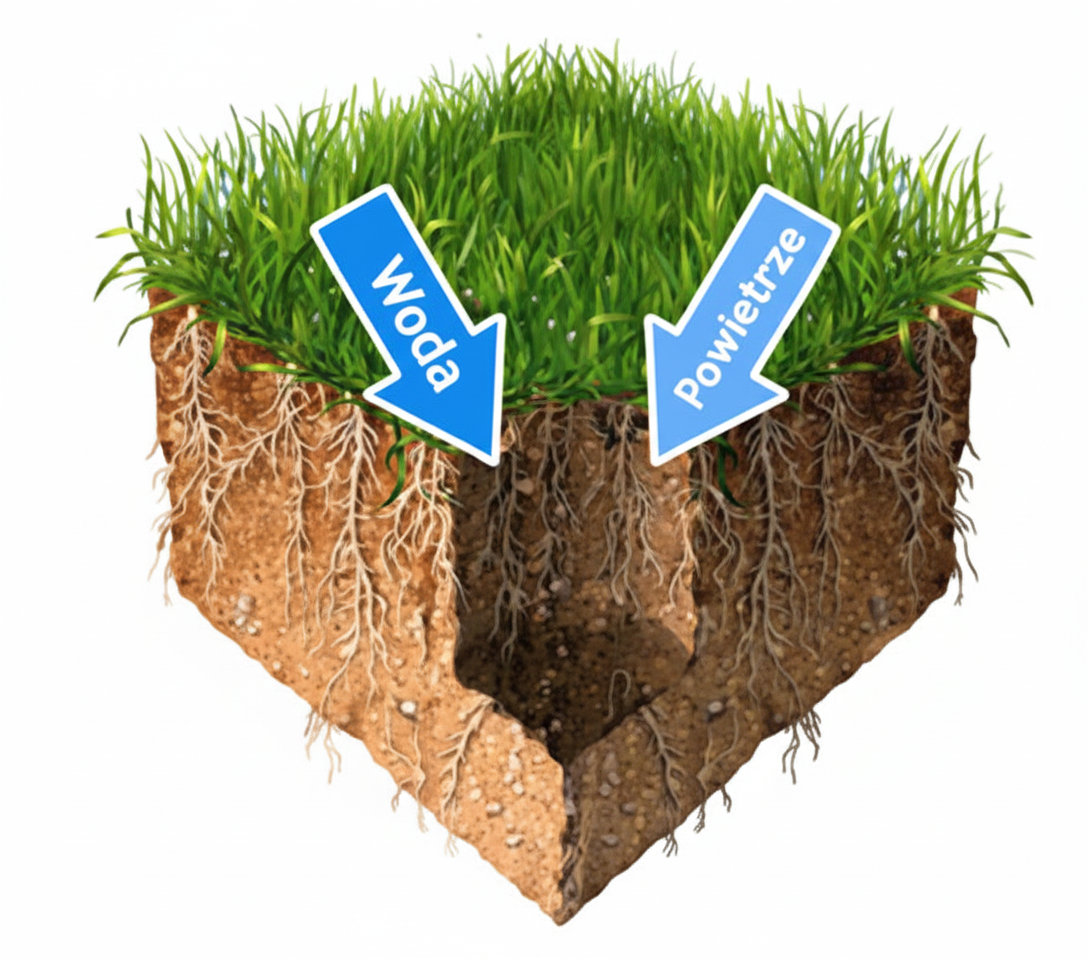
During year-round use of the garden, the surface becomes compacted. This is influenced by factors such as melting snow, trampling or driving over it with, for example, a wheelbarrow. A common phenomenon among lawns is the production of a layer of thatch (organic matter) during the year. Thatch is divided into two types: surface and subsurface. Unfortunately, both types are harmful to the overall development of grasses because they limit the penetration of water, oxygen, fertilisers and nutrients into the soil. Therefore, to protect the grass from drying out and yellowing, a hole aeration treatment is performed. This will eliminate excessive compaction of the top layer of the turf, and also improve the overall condition of the lawn.
Before the treatment, it is worth properly preparing the lawn and substrate. Mown grass and stones or sticks should be removed from its surface. It is beneficial if the soil is slightly moist, making it easier to cut the holes. Remember, however, that the ground must not be too wet or too dry. Before starting work, wait for the water to penetrate into the lower layers of the turf. Also, make sure that the grass in the garden is not too high. Before proceeding with lawn aeration, mow the lawn to the appropriate height. The blades should measure about 3 centimetres. If the turf is higher, the grass may wrap around the blades or the aerator may pull out clumps.
How is aeration performed?
This depends on the chosen equipment and the type of treatment being carried out. If you decide to aerate the lawn using special shoes, you will perform surface aeration of a shallow depth. In this version, spiking the turf is very simple. To perform aeration, you should walk across the lawn in spiked sandals to evenly spike the soil. Lawn aeration performed this way is quite shallow. Lawn aeration performed with a special roller looks similar. Simply pull it across the lawn in one direction across the garden to make the appropriate number of holes. As with the sandals, lawn aeration performed this way does not cut deep into the grass.
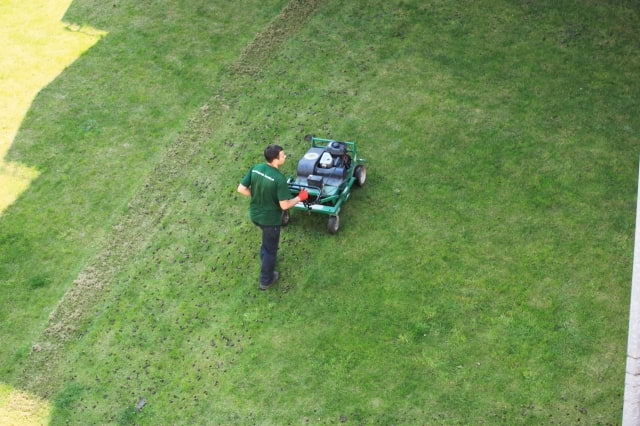
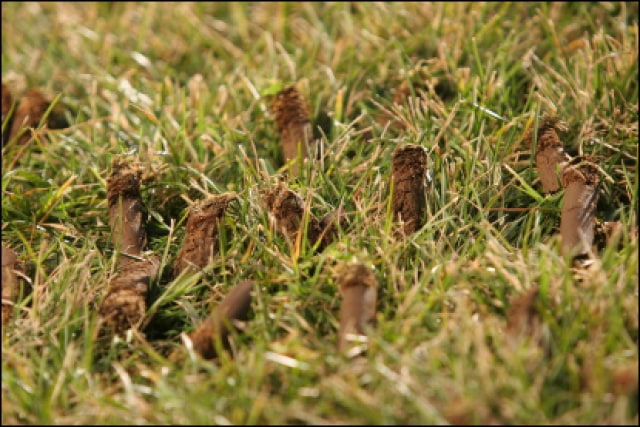
Using a petrol aerator, which cuts deeper holes in the soil, is the most effective method for deep aeration, which will free the turf from the layer of organic matter. What’s more, lawn aeration with mechanical equipment ensures uniform hole density and equal depth. Soil from the cut holes is pulled to the surface and removed, which prevents compaction of the substrate around them – which is what happens when only spiking the turf. This operation will thin out the compacted layer on the lawn surface and simultaneously loosen the dense soil in the root zone (commonly known as subsurface compaction).
It is also worth mentioning an interesting solution, which is soil improver – organic bioactivation – Mr. Green Grass®. This is a biological preparation that not only improves aeration and soil permeability but also stimulates microbial life, contributing to healthier plant development and better soil aeration. It also helps in neutralising toxins and binding heavy metals, cleaning the soil and making it safer for the lawn. Importantly, it can also be used with new sowings.

Soil Improver – Organic Bioactivation – Mr. Green Grass®
Original price was: £12,95.£6,45Current price is: £6,45.- Stimulates the activity of microorganisms in the soil
- Improves nutrition via the root system
- Ecologically improves soil parameters
- Enriches the soil and improves fertilisation efficiency
- It has great reviews from customers
Advantages of aeration
The gardening treatment of aeration is not only valuable but absolutely essential for the proper development of your turf. Performed systematically, it will definitely have a positive impact on your blades, as it:
- supports lawn regeneration;
- improves turf health and thereby reduces subsequent labour costs;
- helps roots absorb oxygen, necessary fertilisers and water through the created gaps;
- improves air exchange between the soil and the atmosphere;
- strengthens the regenerative capabilities of the turf and supports its tillering;
- reduces soil compaction under the lawn;
- increases the water capacity of the soil;
- reduces surface runoff and the formation of puddles;
- grass roots become stronger, which increases the lawn’s resistance;
- strengthens the turf’s endurance to heat and drought;
- loosens the layer of organic matter, which significantly improves water flow;
- favourably affects the elasticity and softness of the blades.
Frequency of treatment
To be honest, there is no rule for this. Aeration is performed whenever the need arises. However, many people like to have it as a permanent point in their annual lawn care programme, at least once a season (usually in spring). And quite rightly so! Annual aeration brings only benefits to our lawn. What’s more, frequently used lawns or those established on heavy soils require aeration even two or three times a year. Golf courses, sports lawns and urban lawns may require cutting three to five times a year. This depends on the degree of use.

When to perform lawn aeration?
Depending on the grass species, usually spring and autumn are the best times to carry out aeration. In spring, we choose a time between March and May. This can be the first step to regenerate the lawn after winter. Of course, we can also look after the turf in summer. At this time of year, hole aeration is used to improve water distribution to the root system, which results in water savings and better utilisation. We can also carry out the aeration treatment in late summer. In autumn, we choose to perform aeration before November. Aeration before or during fertilising at the end of the season supports root development and improves growth in the following season.
Regularly making holes in lawns throughout the growing season will certainly have a positive effect on the substrate, as the soil will gain better access to water and fertilisers. Lawn aeration will also reduce the risk of moss appearing and the substrate becoming too compacted. Take into account that there are different types of lawn aeration and it is worth using them depending on needs.


Other maintenance treatments
Of course, there are many ways to comprehensively look after the garden. Firstly, it is worth remembering that proper fertilising is the basic and most important way to achieve your dream turf. However, lawn scarification is another important garden task. It should be performed, preferably in spring, as this is the best way to remove moss and thatch, along with fungal spores and weed seeds. It also limits the appearance of moss. Wondering what the order is: aeration or scarification first? Generally, scarification should be carried out first, because it is a more invasive action. Important tips on what scarification looks like and when to carry out this treatment can be found in our detailed article on scarification!
It should also be remembered that lawn top dressing should be carried out at a similar time to the aeration treatment. This allows the sand to penetrate deeper into the ground. Wondering what the purpose of this action is and whether it is worth doing this work in your garden? Read the article on lawn top dressing and find out for yourself!