




A beautiful, healthy and even lawn is the dream of many people. Unfortunately, this effect cannot be achieved without providing the grass with the right conditions for development. One of the basic factors directly affecting the correct growth of blades is the appropriate soil pH level. To adjust it, lawn liming is carried out.
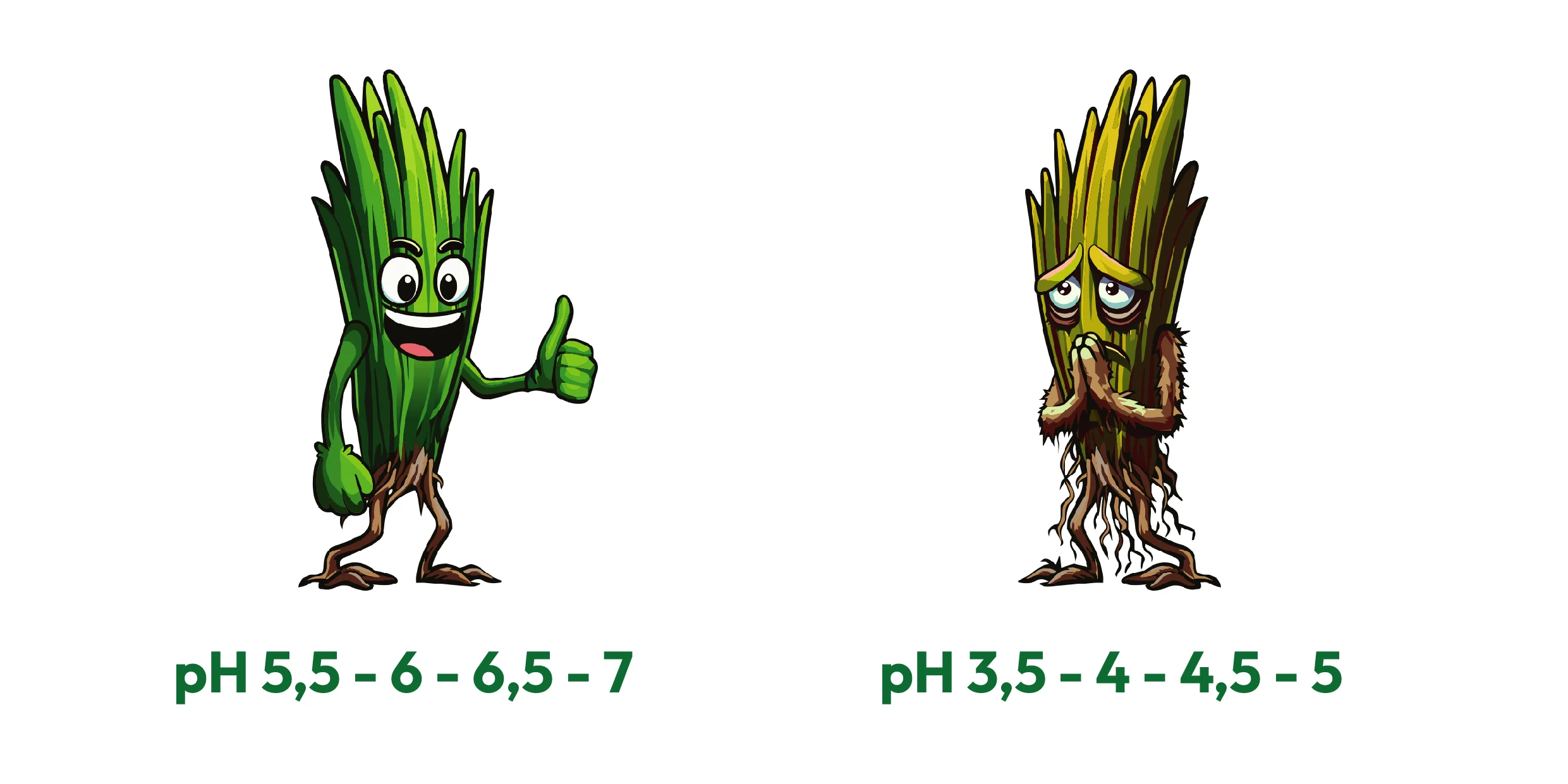
This is a simple procedure involving the distribution of a deacidifying fertiliser on the grass surface, which is designed to increase the alkalinity of the soil. The pH level should be between 5.5 and 7.5, and its ideal value is 6.5. Liming should only be carried out if the pH falls below 5.5. To find out what the pH of the soil is, you can purchase a strip or electric pH meter. However, it is worth comprehensively testing various indicators to have a broader understanding of the soil conditions in your garden. For this purpose, you can carry out a soil test.
Too acidic soil – symptoms
We already know how to test the soil acidity level, but what can be a signal to carry out such a test? Above all, the poor condition of the turf. If the grass does not grow and the blades are weak, spotted, light green and not resistant to treading, this may indicate a pH level that is too low. Also, the intensive development of moss and weeds, especially field horsetail, is a signal of problems with a substrate that is too acidic. What is more, in acidified soil, the root system does not develop properly, as it is not able to fully absorb essential nutrients. In soil that is too acidic, plants do not absorb phosphorus and magnesium in particular.
When and how to lime the lawn?
This maintenance treatment should be carried out at the right time, i.e. outside the growing season. The best time for soil liming is early spring, in the period from February to March, when the grasses have not yet started to grow after winter. Deacidification can also be carried out in autumn, between October and November. During this time, the grasses are no longer growing, preparing for the upcoming winter. If there is a thick layer of thatch on the lawn, it is worth properly preparing the lawn before fertilising by carrying out aeration and scarification. Usually, deacidification only needs to be performed every 3-4 years, as calcium is a macronutrient that remains in the soil for a long time.
Spreading the calcium mixture should be carried out on a dry and windless day. If you are only fertilising a small home lawn, you can use a hand spreader. For larger areas, it is necessary to use a rotary spreader. After the treatment, the lawn must be watered abundantly. Lawn liming can be carried out on both heavy and light soils. If you do not know which product to use to increase the soil pH in your garden, check our perfectly balanced pH Balancer – Uptake Improvement – Mr. Green Grass®.
Advantages of soil liming
Above all, the use of calcium-magnesium fertilisers neutralises acidity and increases alkalinity, which directly translates into soil quality, which clearly improves the quality of the grass. Liming increases the effect of mineral fertilisers — it activates potassium and helps in the utilisation of phosphorus. Deacidification also prevents fungal diseases and the formation of moss on the lawn, and also counteracts the occurrence of grass pest larvae, which are particularly active in early spring. Calcium also has a positive effect on the formation of the correct structure of the substrate and stimulates microbial life in the root zone.
Although liming has only advantages, it should not be combined with other fertilisers, as this may cause chemical compounds absorbable by plants to precipitate. Therefore, appropriate fertilisation dates must be observed. If you do not want to worry about this, Mr. Green Grass carries out lawn liming both as a separate treatment and simultaneously during the 4th step of the Lawn Care Programme.