




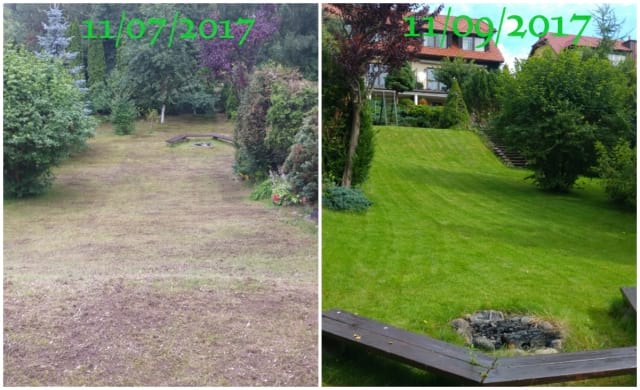
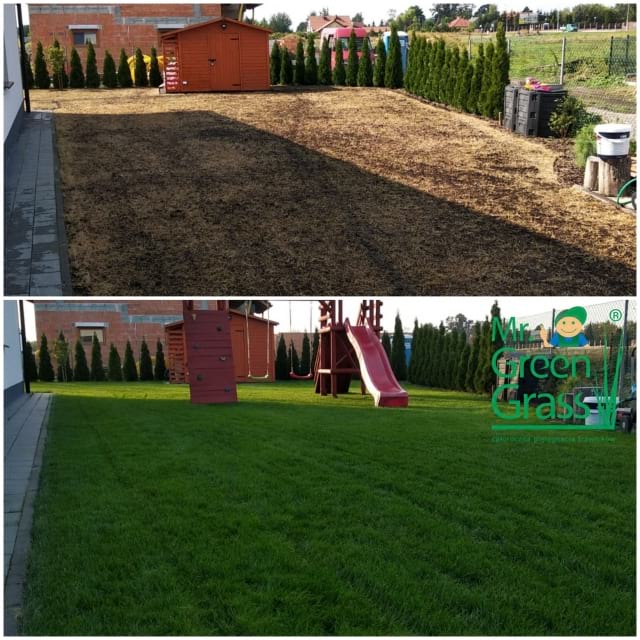
Lawn renovation is a key element of green space care, especially after difficult winter months, intensive use, and hot summers. Depending on the season, the approach to lawn renovation should vary, so treatments must be adapted to weather conditions and the needs of the turf.
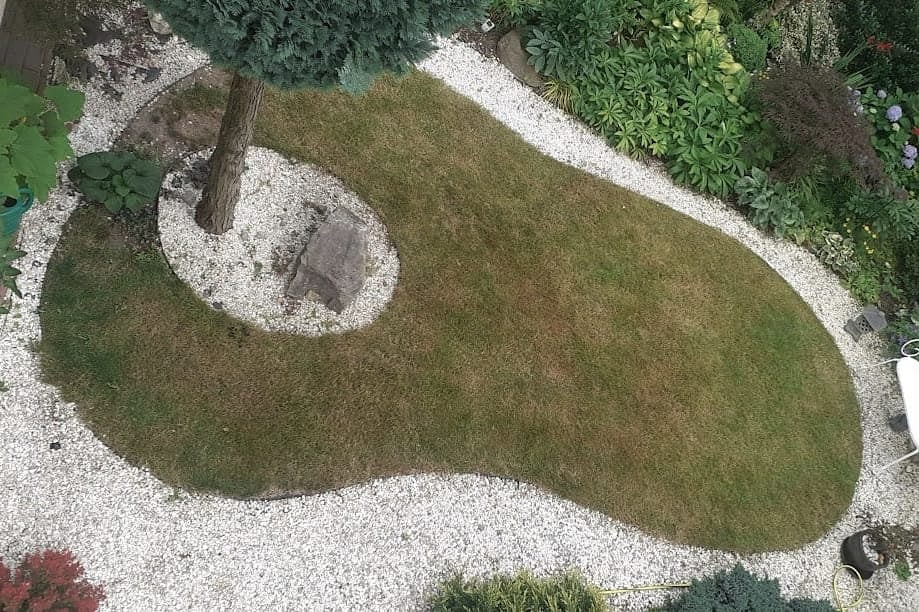
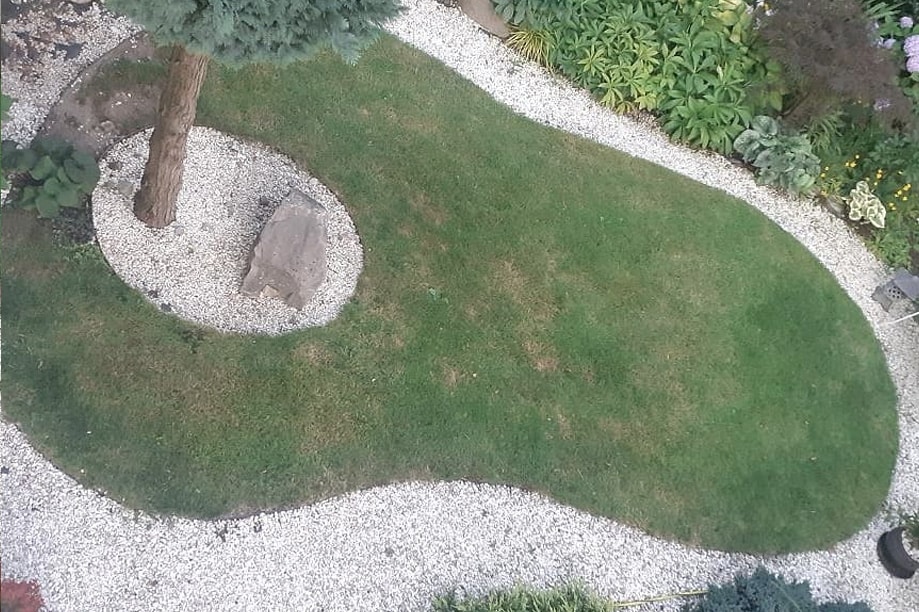
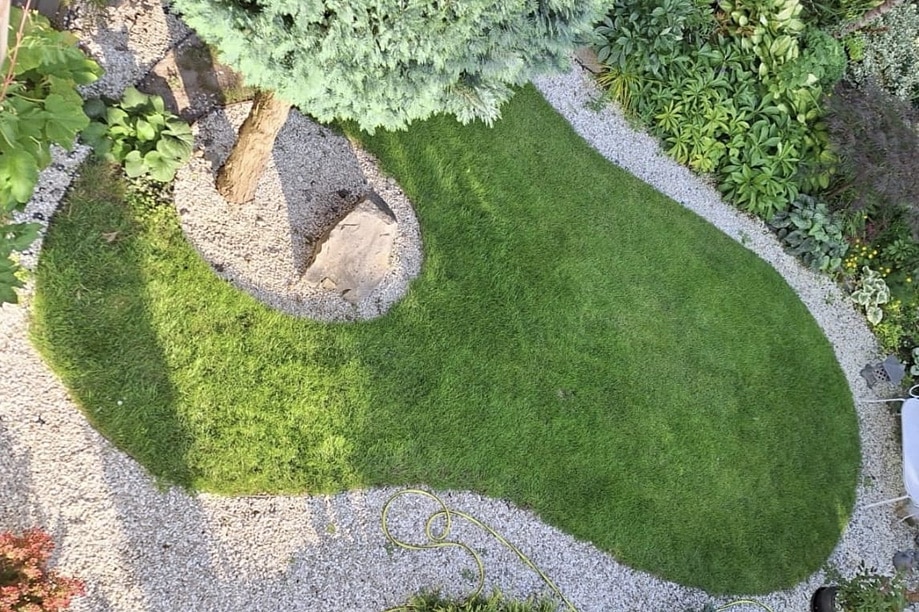
Below we present a detailed lawn renovation plan for both spring and autumn, and we will also discuss why July and August are not suitable months for carrying out these works.
Products you will need

New Lawn Feed – Perfect Start – Mr. Green Grass®
Price range: £19,95 through £69,95
Sports Lawn Seed Mix – Pro Performance – Mr. Green Grass®
Price range: £29,95 through £55,95Autumn lawn renovation (September, October)
Autumn is the second key period of the year when you should take care of the lawn. September and October are the ideal time for renovation, which will prepare the grass for winter and ensure a healthy start in the next season.
Step 1: Removal of leaves and organic debris
In autumn, fallen leaves and other organic debris should be regularly removed from the lawn. Lingering leaves can lead to the development of mould and fungal diseases, so systematic raking is important.
Step 2: Autumn scarification and aeration
Autumn scarification removes thatch accumulated during the season, which blocks air and water access to the soil. Aeration improves soil structure, which promotes better root development. These treatments are essential for the lawn to survive winter well and return to full health in spring.
Step 3: Overseeding grass seed
Autumn is an excellent time for overseeding, as soil conditions are ideal – the soil is warm and moist. Seeds therefore have perfect conditions for rapid germination and rooting. It is worth choosing grass seed mixes adapted to the conditions on your plot to achieve the best results.
Sports Lawn Seed Mix – Pro Performance – Mr. Green Grass®
Price range: £29,95 through £55,95- Strong turf resistant to trampling and low mowing
- Quick recovery from damage
- Composition containing grass seed of the highest quality
- Ideal for sports pitches and back gardens
- Efficient packaging covers a large area (only 20 g/m²)
Step 4: Autumn fertilising
After overseeding grass seed, a fertiliser should be applied. It will support root development and increase the grass’s resistance to low temperatures. The fertiliser should be spread evenly over the entire lawn.
New Lawn Feed – Perfect Start – Mr. Green Grass®
Price range: £19,95 through £69,95- Ensures rapid rooting of grass seed
- Significantly strengthens the structure of young turf
- Accelerates grass growth in the initial period
- Supports uniform greening from the first weeks
- It has great reviews from customers
Step 5: Watering and care
Watering is crucial for effective lawn renovation in autumn. For the first 14 days after sowing seed and fertilising, the lawn should be sprinkled daily to ensure adequate moisture for the seeds. Then, for 21 days, water the lawn daily, with heavy watering twice a week. Regular watering will provide seeds with optimal growth conditions, and the lawn will be well-prepared for winter.
Step 6: Preparing the lawn for winter
To conclude the autumn renovation, it is worth trimming the grass to a height of about 5 cm. This will prevent the blades from breaking under the weight of snow. It is also worth considering the use of winter fertilisers, which will strengthen the grass and increase its frost resistance.
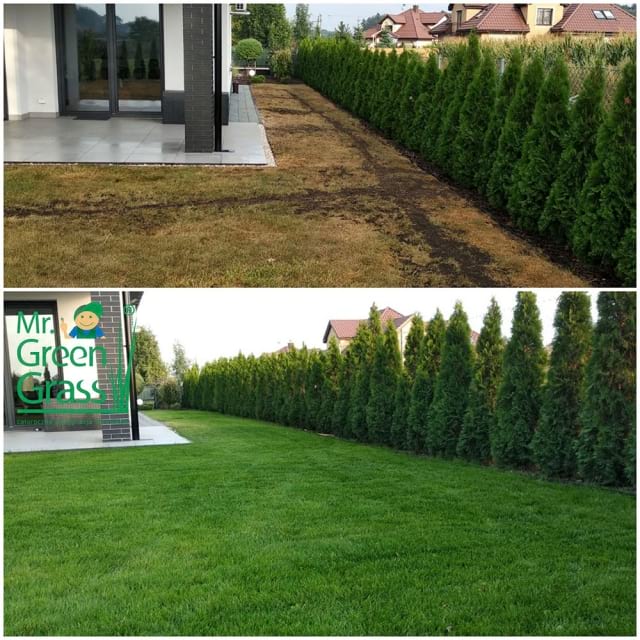
Spring lawn renovation (April, May)
Spring is the ideal time for lawn renovation after winter. The period from April to May is crucial, as the grass begins to grow intensively and the soil is sufficiently warm to support the development of new seeds. Here are the steps worth taking as part of spring lawn renovation.
Step 1: Removing weeds
Before you proceed with lawn renovation, it is necessary to remove weeds. Apply Lawn weed killer – Starane 260 EW, which effectively controls broadleaf weeds. The product works systemically, eliminating weeds from the root. Remember to follow the manufacturer’s recommendations regarding dosage and application conditions to avoid damaging the lawn.
Sports Lawn Seed Mix – Pro Performance – Mr. Green Grass®
Price range: £29,95 through £55,95- Strong turf resistant to trampling and low mowing
- Quick recovery from damage
- Composition containing grass seed of the highest quality
- Ideal for sports pitches and back gardens
- Efficient packaging covers a large area (only 20 g/m²)
Step 2: Mowing the lawn
2-3 days after spraying for weeds, mow the lawn to a height of 3-4 cm. Low mowing will prepare the lawn for subsequent renovation treatments.
Step 3: Scarification and aeration
Scarification is a key treatment that will help remove accumulated thatch and dead organic matter. Carry out scarification in three directions: first at a 0-degree angle, then 45 degrees, and finally 90 degrees. Collect the thatch and dry grass pulled from the turf. Aeration, or spiking the soil, will improve air and water permeability to the grass roots, which is particularly important on compacted soils. These treatments will allow the grass to grow better and prepare it for the intensive season.
Step 4: Overseeding grass seed
After scarification and aeration, it is worth carrying out overseeding. Sow the seed mix with a rotary spreader, taking care that the seeds do not land on flower beds or borders. You can also use a drop spreader to precisely sow the seeds. In spring, Self-Repairing Lawn Seed Mix – Patch Repair – Mr. Green Grass® will work best, as it quickly fills empty spots on the lawn, creating a dense and even turf.
Step 5: Fertilising
After sowing the seeds, fertilise the lawn with New Lawn Feed – Perfect Start – Mr. Green Grass®. Use a rotary spreader to ensure even distribution of the fertiliser over the entire lawn surface. Fertiliser rich in nitrogen supports rapid grass growth and recovery after winter.
New Lawn Feed – Perfect Start – Mr. Green Grass®
Price range: £19,95 through £69,95- Ensures rapid rooting of grass seed
- Significantly strengthens the structure of young turf
- Accelerates grass growth in the initial period
- Supports uniform greening from the first weeks
- It has great reviews from customers
Step 6: Watering and care
After sowing seeds and fertilising, water the lawn heavily, preferably directly from a hose, so that the seeds are thoroughly soaked and washed into the grooves after scarification. For the first 15 days, water the lawn daily, providing 4 l/m² of water, so that the seeds have adequate moisture for germination. Every 7 days, water the lawn heavily using 12 l/m² of water.
Step 7: Mowing after growth
Wait to mow until the lawn reaches 10-12 cm and mow at the highest mower setting (7-8 cm). Perform the second mow at a height of 6-7 cm, and the third at 5 cm.
July and August – why is lawn renovation not performed?
Summer months, such as July and August, are not a suitable time for lawn renovation. The reasons are as follows:
- High temperatures: Summer is a period when the soil dries out quickly, making proper seed germination difficult. Even with regular watering, the high air temperature means the grass does not develop properly, which can negatively affect renovation results.
- Water stress: The lawn in summer often suffers from water stress, which can weaken the grass and reduce renovation efficiency. Even intensive watering may not be enough to prevent the soil from drying out.
- Excessive use: In summer, the lawn is often used intensively, which can further hinder its renovation. Walking on the lawn, children playing, pets running – all this contributes to mechanical damage to the lawn, which hinders the renewal process.
For these reasons, it is best to focus on lawn renovation in spring and autumn, when weather conditions are more favourable and the grass has the best chance for healthy growth and development.
Benefits of lawn renovation
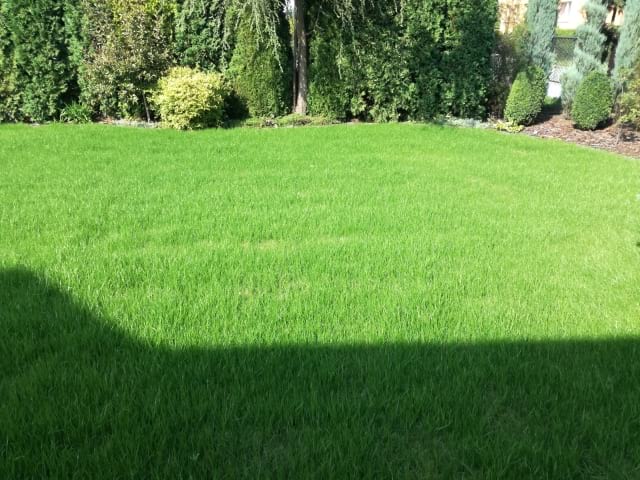
As you can see, our programme is based on many treatments that will significantly improve the condition of your turf. What benefits will you achieve if you perform a lawn renovation? Above all, you will improve the organic quality of the soil on which a new, beautiful turf will grow. What’s more, if you eliminate an excessive amount of thatch, soil permeability will significantly improve. Thanks to this, the absorption of water, lawn feed and nutrients will increase. After removing moss, beautiful grass will finally develop, also in shaded areas. By overseeding with new seeds, you will refine the type of grass on your property, choosing the right mix for the prevailing soil conditions. Finally, it is worth noting that carrying out a full lawn renovation is a much lower cost than removing the current one and starting a new one from scratch.
Summary
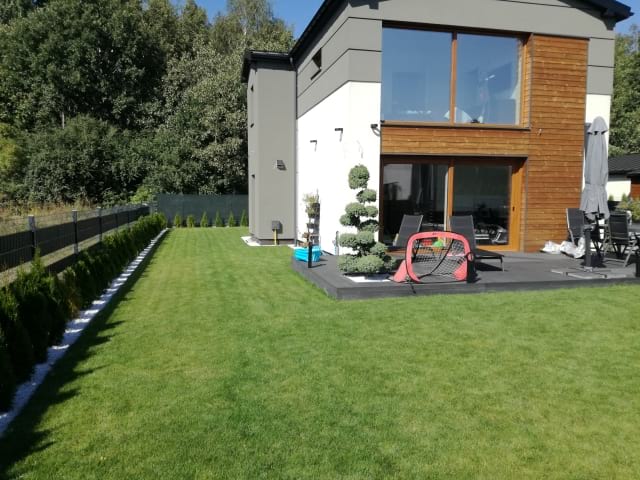
Lawn renovation is a process that requires care and consistency but brings excellent results. In spring, we concentrate on restoring the lawn’s vitality after winter, while in autumn – on preparing it for winter challenges. July and August are months in which renovation is not recommended due to unfavourable conditions. By following the above steps, you will ensure your lawn has a healthy, green appearance all year round.