




Comprehensive lawn care consists of many necessary tasks. A very important element of lawn regeneration, which should be performed with the appropriate machine, is lawn scarification. In reality, it is one of the most important maintenance treatments in the garden. It is best to perform it regularly to enjoy a beautiful and healthy lawn. It involves vertical cutting of the turf and aims to remove the accumulated layer of thatch. Eliminating this layer helps to limit the spread of moss on the lawn. Thanks to this, the lawn will regain its best condition, it will be beautiful and green, and the grass will grow strong and healthy.
What are the consequences of neglecting this maintenance treatment? Firstly, we allow for the growth of a thick layer of thatch and other debris that stifle the grass and limit its ability to develop and grow. Compacted turf has limited access to light and oxygen, and nutrients penetrate the soil with difficulty. Furthermore, lawn feeding is less effective when the turf is covered by a compacted layer of thatch, moss, and dead organic matter. Because of this, valuable fertiliser is unable to penetrate to the appropriate depth. What is more, water does not soak in well, meaning the grass does not regenerate properly. Lawns struggling with thatch and moss problems suffer much more in the event of water shortage and soil hypoxia. Lawn scarification is designed to remove a large part of the moss and surface humus. Its advantage is the elimination of the causes that allowed moss to thrive in the lawn until now.
Impact of the treatment on the lawn
Are you wondering if it’s worth carrying out lawn scarification in your garden? You can be sure that the results achieved will delight you! Of course, immediately after scarification, the grass will not look like a golf course and will need time for regeneration, but just a few weeks after the treatment, the lawn will regenerate and strengthen. Furthermore, properly conducted scarification:
- ensures the removal of dead plant parts;
- gets rid of excess thatch from the turf;
- controls moss in our garden;
- makes the root system grow better;
- helps to aerate the lawn and increases airflow to the soil;
- helps to aerate the lawn and increases airflow to the soil;
- supports lawn regeneration;
- ensures that grass roots gain better access to fertilisers.
Scarification tools
Wondering what tools to use? The device used for lawn care and through which this gardening treatment is carried out is called a scarifier. Its vertical blades remove layers of dead grass parts, other organic matter, and unwanted elements (such as stones, branches, leaves, and sticks) from the lowest zone of the maintained lawn.
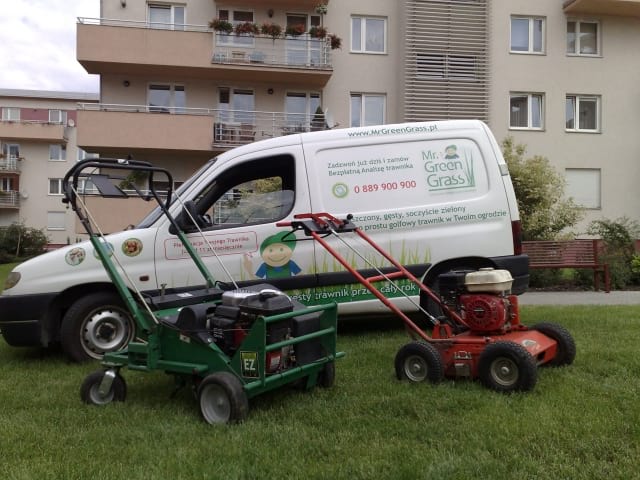
There are three types of scarifiers. The simplest type is the manual scarifier, which uses muscle power. This tool is in the form of a roller equipped with vertical blades. Cutting grass with a manual scarifier is recommended only for small lawns and plots in good condition, as it requires considerable effort. Additionally, lawn scarification performed with a manual tool is not as effective as with a powered model, as the incisions are not made as deep.
The next model is the electric scarifier, which is ideal for medium-sized lawns. This is much more efficient equipment than a manual scarifier, as it cuts the grass to a greater depth. Furthermore, electric scarifiers work more quietly and do not generate exhaust fumes like petrol-powered models. It is worth checking whether the chosen equipment is battery-powered or corded. If you choose a corded model, remember that you will be limited by its length.
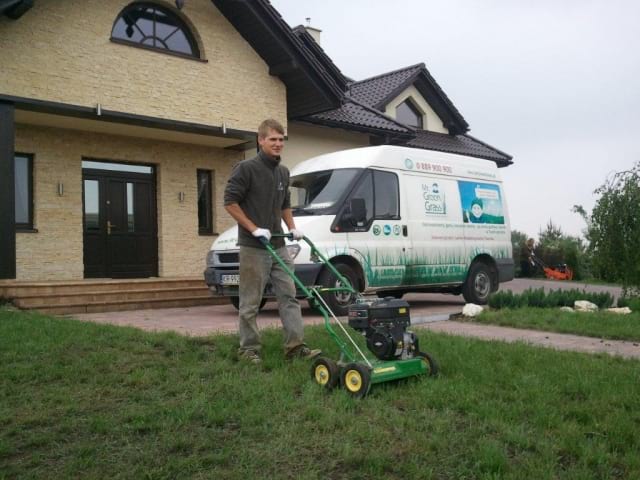
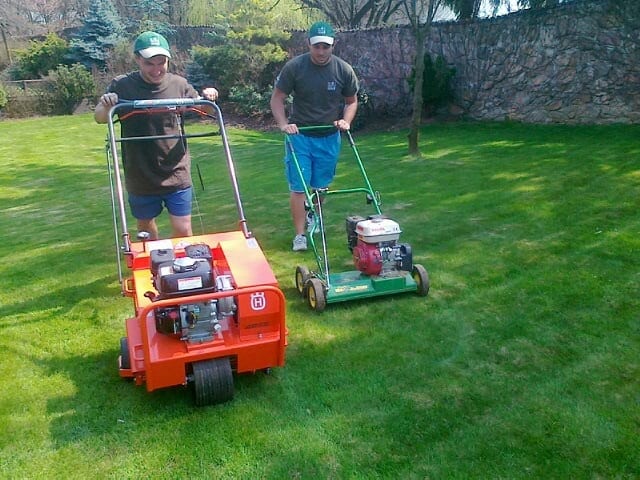
A petrol scarifier is the most efficient gardening equipment of this type. It is perfectly suited for a large lawn. It will also work perfectly for older lawns that have a thick layer of thatch. Furthermore, due to the lack of need for a power connection, you are not limited by the length of a power cable. Unfortunately, petrol scarifiers generate noise and exhaust fumes, and also weigh more compared to electric models.
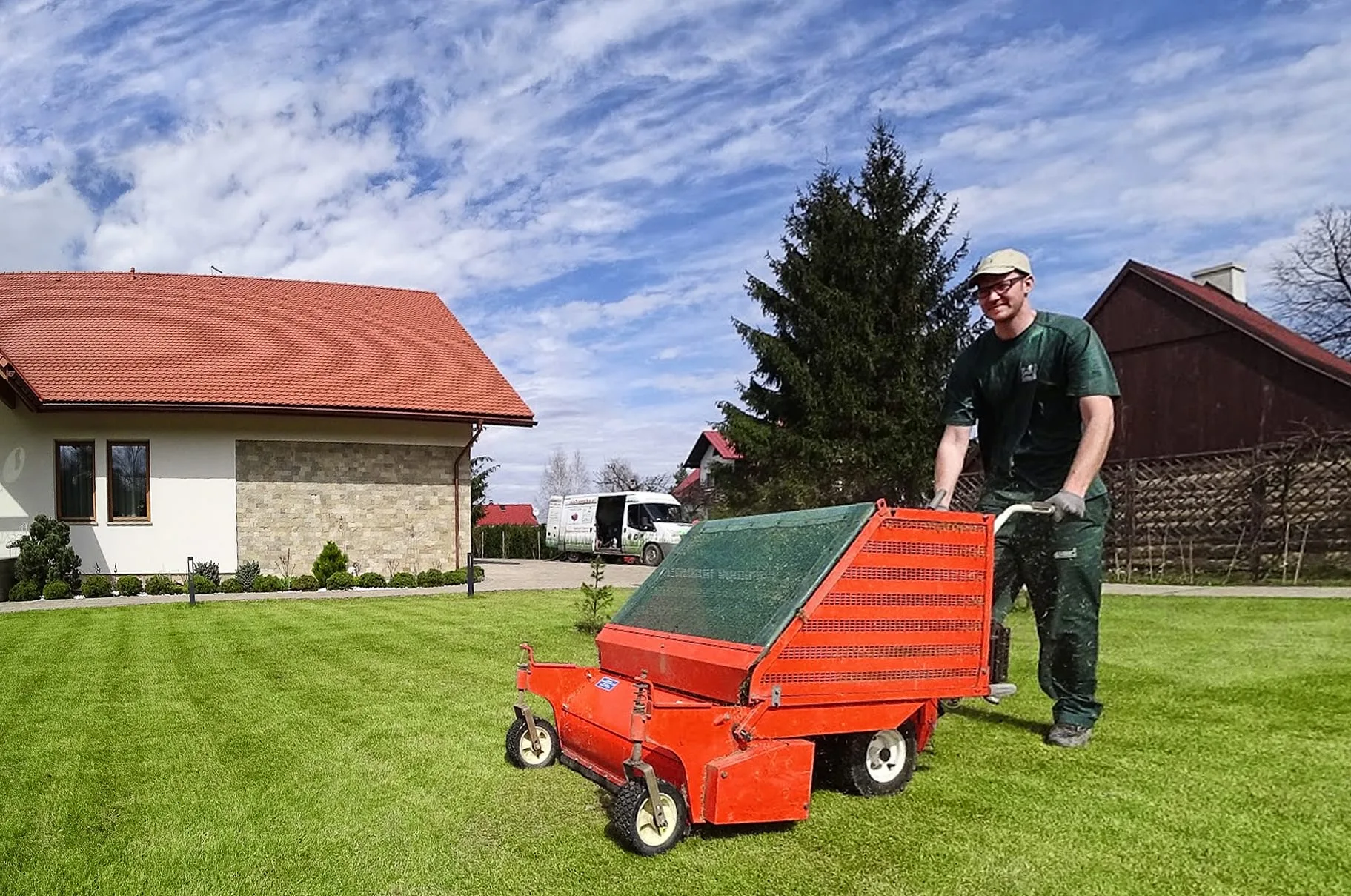
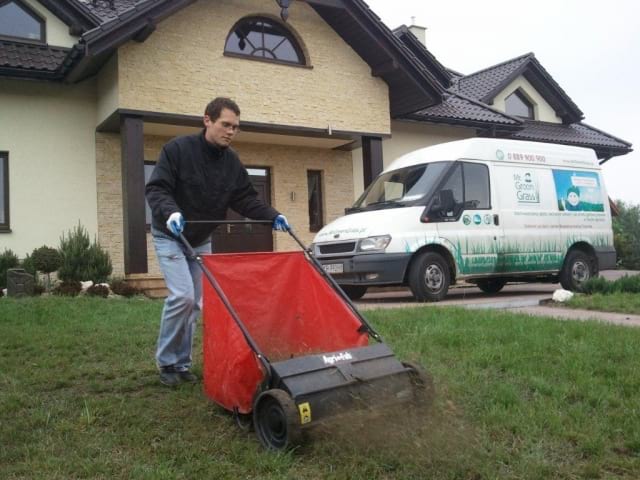
The choice of equipment is usually dictated by the size of the area where the treatment will be carried out, as well as the working width of the device itself. However, it is worth getting a motorised scarifier, which looks like a regular lawnmower, as the manual model requires a lot of effort and work. What is more, some garden centres offer equipment hire. You can also hire a professional team to carry out professional scarification in your garden.
How to scarify a lawn?
Performing the treatment should be preceded by preparing the area. In the first step, you need to properly prepare the ground for scarifying the lawn. Remove any sticks, stones, and other debris from the turf. Next, mow the lawn low. Otherwise, the blades of grass may get tangled in the cutting blades. You should also ensure that the soil is slightly moist, which will make it easier for the scarifier to make narrow incisions in the grass. Remember, however, that the ground should not be too wet.
On a lawn prepared this way, you can carry out its scarification. Firstly, you should cut shallowly, to a depth of 5 mm to 10 mm. Then the process should be repeated, but across the first incisions, so that the pattern of cuts forms a checkerboard. On the second pass, you can cut deeper into the soil, from 10 mm to 15 mm. If there is a layer of organic matter resembling thatch of significant depth on the lawn, it may be necessary to perform additional passes.
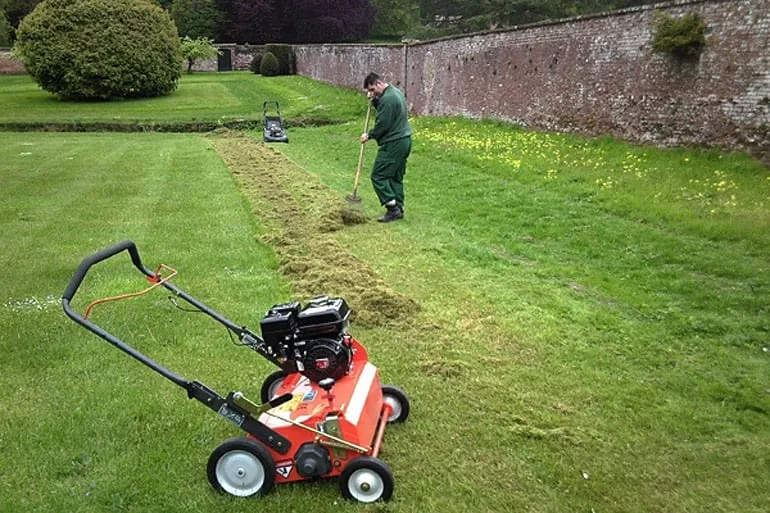
After you have managed to perform the scarification using the appropriate equipment, the organic material pulled out earlier must be removed from the lawn. Moss and grass residues are easiest to simply rake up. Don’t forget about watering! Your garden will need support to fully regenerate. For this reason, it is a good time for lawn feeding. After appropriately balanced fertilisation, the plants will be able to return to form quickly.
Raking vs scarification
Many people believe that lawn rakes are capable of achieving the same results as a scarifier. However, scarification should not be confused with raking the lawn. Even small electric rakes with wire tines can cause more harm than good.
Raking the lawn carried out with a leaf rake or a raking machine with small tines is a process of removing moss and dead parts of plants and grasses. In the case of scarification, knives, blades, and dagger-like teeth are used to remove thatch, which is a more in-depth and thorough operation. A professional machine travels over the entire lawn area, as close to the edge as possible (about 5 cm). Thatch is removed mechanically or manually. Simply put, scarification brings a completely different result: it cuts the lawn, removes dead grass and weeds, thatch, moss, and the causes of its formation.
When to scarify the lawn?
Firstly, scarification should not be carried out in the first year after establishing a lawn. Scarification is performed on a lawn that is at least two years old. Only after this time from establishing the lawn does the grass have a sufficiently strong root system so that cutting the turf does not harm it.
The best time for lawn scarification partly depends on the season and prevailing weather conditions. Lawn scarification performed at the right time will ensure its effects are the best possible. However, remember that scarification should not be carried out in winter, and it is also not recommended to scarify in drought conditions.
Spring is the best season to subject your lawn to this treatment. Scarification in early spring supports the recovery of grass after winter. What is more, in spring the lawn will regenerate much faster because the weather conditions are suitable and the soil is rich in water. This is when its growth is most lush. Thanks to this, your turf will be beautifully reclaimed after winter. However, the scarification treatment should only be carried out after the first lawn mowing.
Light scarification can be beneficial in favourable growth conditions in summer. It is best to carry it out when rain is forecast. It is recommended not to do this treatment during drought or heatwaves, as this can expose the lawn to severe drying out. During this period, a better idea might be gentle lawn aeration with a tool that looks like a mower with spikes. This is a less invasive treatment for lawns, as spikes puncture the turf in several places rather than knives cutting across the entire surface.
Autumn is also a good time. In autumn, the lawn will still grow at a fast enough pace to fully regain full health before the frosts arrive. Scarification in autumn will ensure the grass is prepared for the arrival of winter.
It is important that some lawns, particularly delicate ones with a lot of red fescue, may need scarification and aeration twice a season to enable the lawn to regain full health. In such cases, lawn scarification usually takes place in spring and autumn. If your lawn does not have a problem with thatch or moss, and scarification was carried out within the last year, the lawn does not require it.
What next? Other maintenance treatments
After carrying out scarification, the lawn should be kept in a slightly damp state for a few days. Next, we recommend carrying out feeding to accelerate growth and regeneration. Furthermore, you can now deal with overseeding grass seed, as after the treatment they will enter the ground at the appropriate depth. It is also worth thinking about enriching the top layer of soil. This will build a solid base for nutrients for the coming months.
This is also a good moment for top dressing with sand. Because scarification has created numerous openings in the lawn surface, the sand will penetrate the soil quickly and deeply, making the maintenance treatment more effective. Wondering what the purpose is and if it’s worth carrying out sand top dressing in your garden? Read our tips for lawn top dressing!
To comprehensively take care of the lawn’s condition, scarification is not everything! After scarification, it is also worth starting lawn aeration. This maintenance treatment, aeration, involves cutting holes in the turf that loosen the soil, allowing more water, oxygen, and nutrients to reach the grass roots. Lawn aeration is a complementary treatment to scarification, so it is worth performing them simultaneously during garden work. Need more information on how to perform aeration? Read our article on aeration and learn about the benefits of aerating!