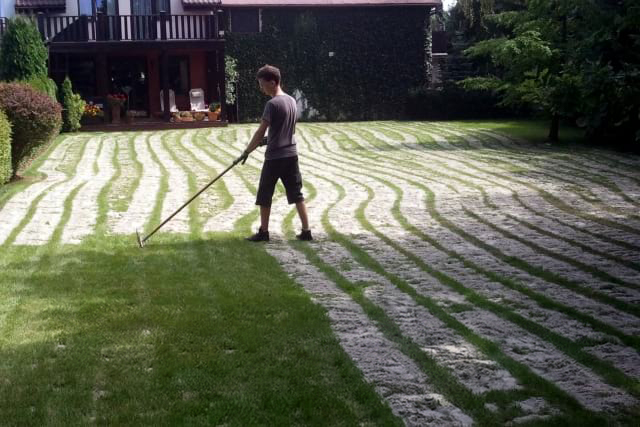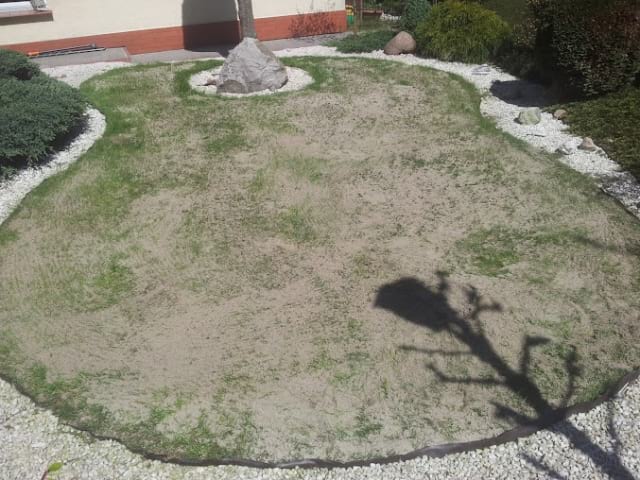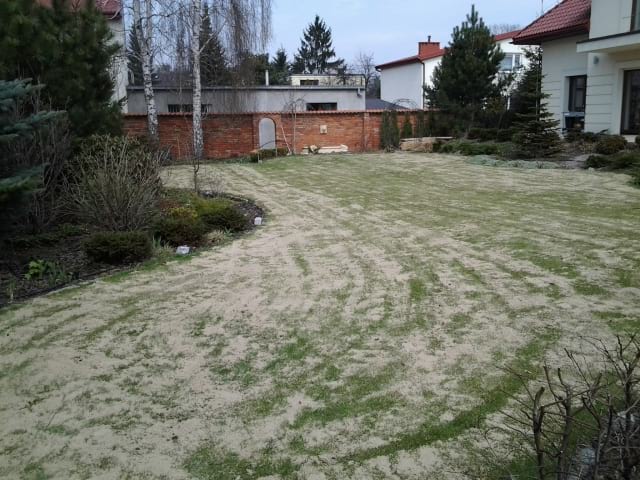

The gardening treatment known as lawn top dressing involves spreading a layer of a special mixture over the surface. The aim of this action is to improve the physicochemical properties of the soil. However, top dressing brings even more benefits! Therefore, this treatment should not be neglected in seasonal lawn care.
What other benefits come from top dressing? Performed once a season, it results in better rooting and increases turf density. It is also a good way to “level out” minor irregularities and depressions on an uneven lawn. Furthermore, it increases the permeability of the substrate, therefore facilitating the penetration of water, air, and lawn feed. After top dressing, the lawn creates better conditions for root development.
Top dressing mixture and substrate type
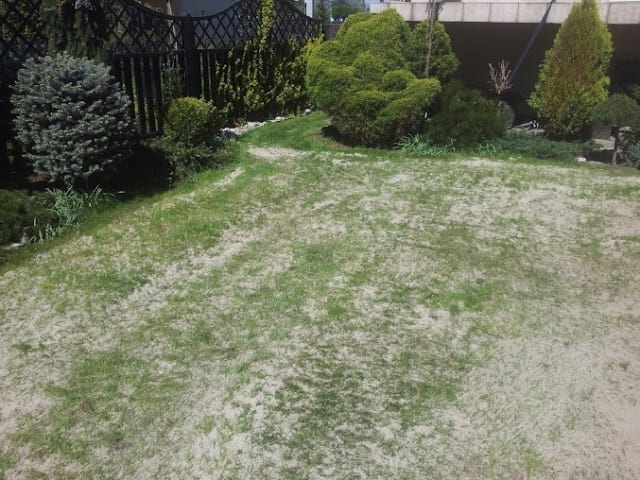
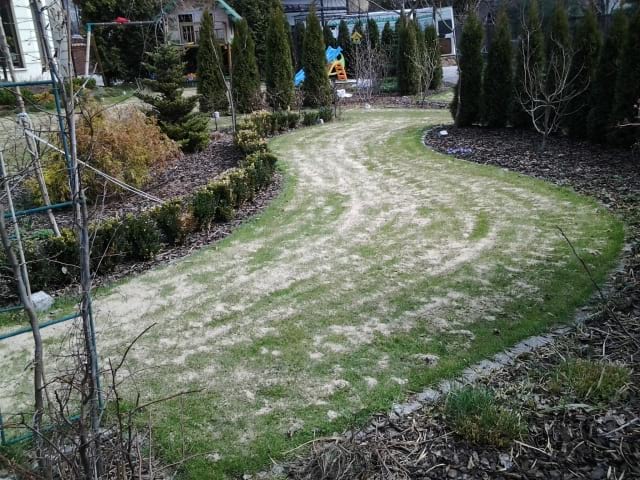
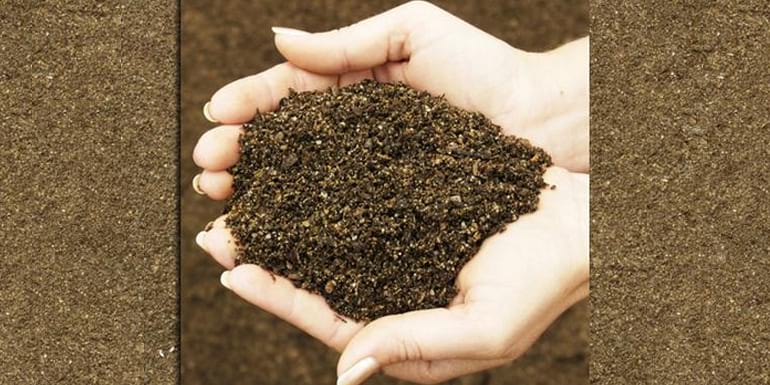
Lawn top dressing involves spreading a thin layer (approx. 3-5 mm) of various materials over the turf, e.g., river sand mixed with soil, clay, peat, and other additives such as chalk or compost. The type of mixture and its proportions depend on the type of soil structure on which the lawn grows. Each sand mixture should be prepared individually depending on the lawn’s needs. Only proven substrates, free from contaminants and weeds, should be used. On sandy soils, we use a mixture rich in peat substrate and clay, while on heavy, clayey soils, the opposite – with a predominant content of sand of the appropriate granulation and type.
Impact of the treatment on the soil
A properly selected top dressing mixture is the key to effectively improving soil properties. In the case of sandy substrate, it will improve its water storage properties, making the lawn more drought-resistant. Conversely, when the substrate is clayey, it will help loosen compacted soil – improving drainage and providing roots with better conditions for development. Another benefit of top dressing is levelling minor lawn irregularities, filling all small depressions (up to 15 mm). Top dressing stimulates the lawn to produce new grass shoots, causing the lawn to thicken, which helps in the fight against weeds and moss.
The top dressing process
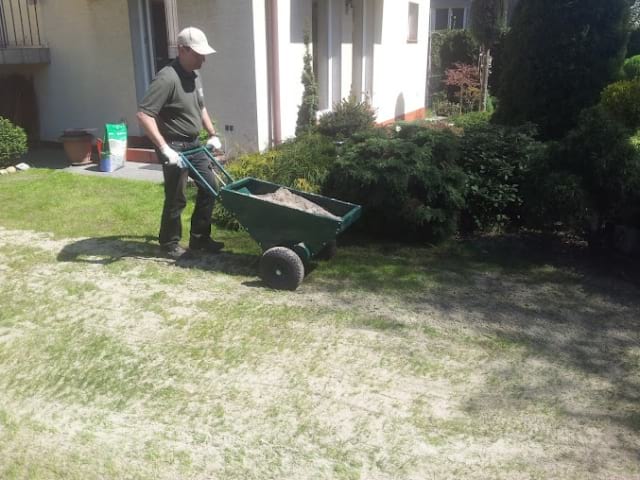
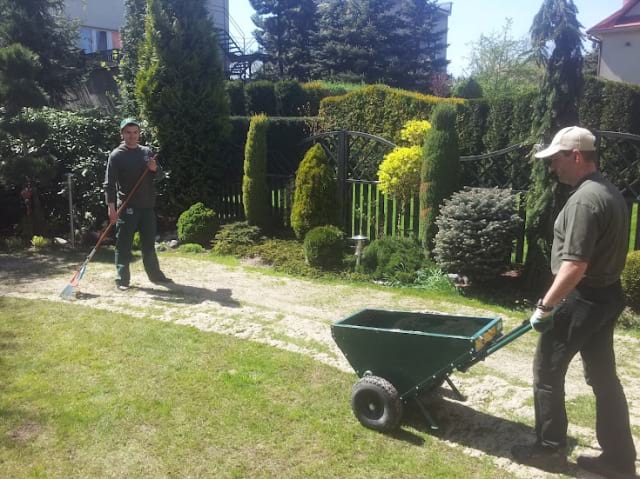
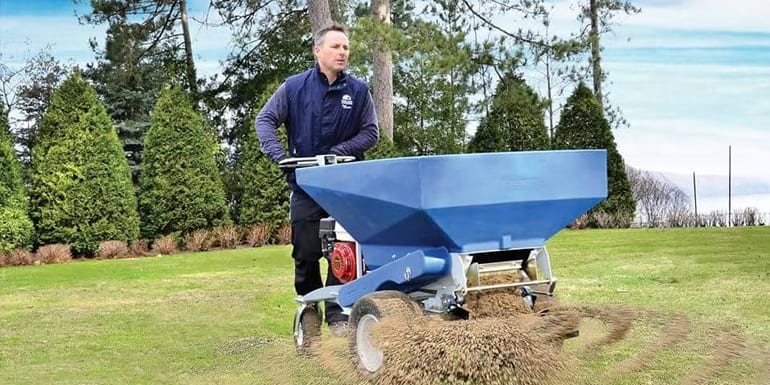
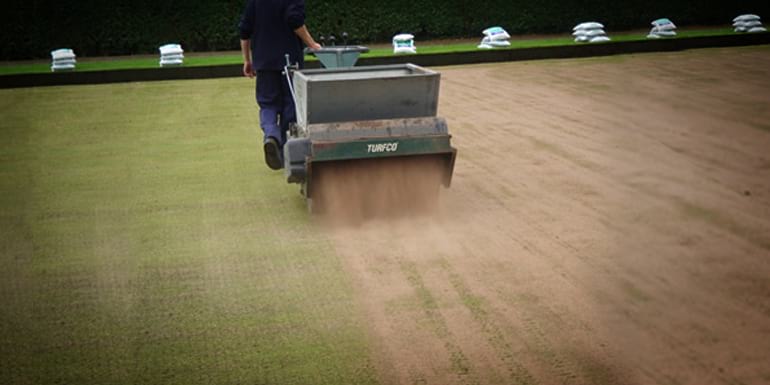
Lawn top dressing is an uncomplicated gardening treatment. In the case of a small lawn, it can be done manually. However, top dressing using a wheelbarrow, shovel, and rake does not work for larger areas. It is very important to spread the layer of sand mixture evenly, at a height of no more than 5 mm. To do this correctly, a special device is needed.
If you want to achieve the best results, top dressing should be performed after scarification and aeration – the mixture of sand, peat substrate, and clay will reach the soil faster and fill the holes created during aeration. Depending on the type of lawn, we use a dose of 3-5 kg of mixture per 1 m², which gives up to 500 kg per 100m²/1ar.
When to perform top dressing?
There are no strict requirements regarding the timing. We can carry it out essentially all year round. Lawns growing on poor soils should be top-dressed once a year with a mixture richer in peat substrate, which will significantly improve soil quality. Lawns established on high-quality soils, rich in organic matter, do not need annual top dressing. However, if you want to achieve the best results, you can top-dress regularly once a year – preferably in autumn from September onwards – when the grasses have the best capacity for tillering. This will create optimal development conditions for your lawn.