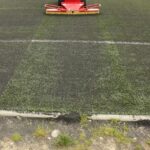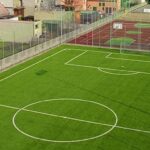

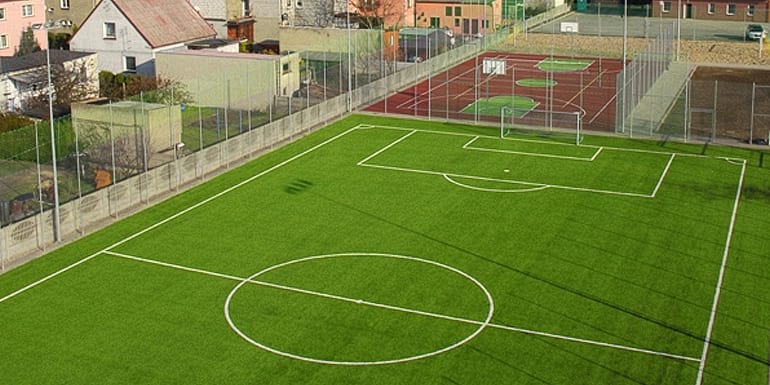
Synthetic grass pitches represent an excellent alternative to natural turf. Thanks to advanced technology in grass production, as well as the construction itself, these pitches surpass their natural counterparts in certain respects. Their functionality, lower maintenance costs, and above all, a higher level of safety contribute to their immense popularity across the country. Furthermore, maintenance of synthetic pitches requires slightly less work than keeping natural sports turf in good condition.
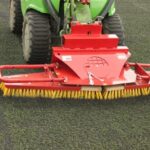
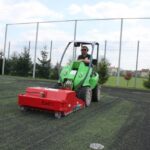
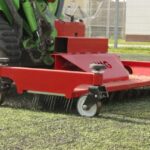
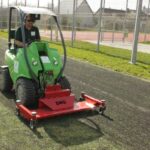
Building a good pitch is, however, only part of the success. Improper use and a lack of turf cleaning quickly lead to its devastation or destruction. To keep the pitch in good condition, it is essential to carry out appropriate maintenance procedures. For care, equipment specifically adapted for this purpose should be used, and it should be handled during good weather conditions. Thanks to correct conservation, you will maintain good play quality on the pitch and extend its lifespan.
Negative factors
The presence of organic material (moss, leaves, grass, soil, etc.) has a decidedly negative impact on synthetic grass surfaces. When fallen leaves remain on the pitch, during daily matches and training, organic material is trodden in and mixed with the infill material. Consequently, this leads to the compaction of the mat and creates conditions favourable for the growth of algae, which contribute to increasing the slipperiness of the pitch. In addition, an organic material layer will form in the mat, where grass, weeds, and moss will grow. Furthermore, moss also grows in areas of the pitch that remain in the shade for long periods and are not properly maintained. Therefore, it is recommended, especially in autumn, to remove fallen leaves from the pitch area and regularly brush the pitch surface.
It should also be remembered that playing on the pitch in flat-soled shoes contributes to faster surface wear than when so-called studs are used.
How and when to use the pitch
In normal weather conditions, the pitch is suitable for play for most of the year. It should always be kept clean. Care must be taken to ensure there are no pieces of glass, cigarette butts, metal fragments, chewing gum, or other sharp debris on it. It is recommended to place a sign at the entrance informing about the requirement to keep the facility clean and to comply with the pitch usage regulations.
At temperatures reaching below -10°C, we recommend closing the pitch. After a period of intense frost, when a thaw and heavy rainfall occur, the pitch should also not be used.
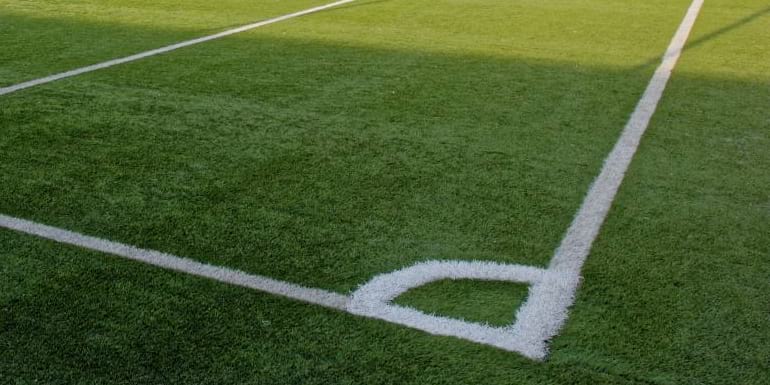
Impact of weather factors on synthetic pitches
Heavy rain
Thanks to the good permeability of the mat and the base, water drains quickly from the pitch surface and it can be used again in a short time. During very intense rainfall, the pitch can become so saturated with water that puddles appear. In such a situation, the surface is unstable and rubber granulate displacement may occur. To prevent this, it is recommended to delay training by 5 minutes or pause it for 5 minutes. Within a few minutes, the water will disappear from the surface and play can continue.
Drought
Dry weather conditions do not have a negative impact on pitch usage. At high temperatures, the granulate may heat up and emit an unpleasant smell; however, this does not affect the possibility of using the pitch.
Wind
The mat lies loosely between the lines. It is filled with approx. 30 kilograms of sand and 14 kg of rubber granulate per m². Across the entire pitch, there are approx. 225 tonnes of sand and 93 tonnes of granulate. Therefore, wind has no impact on the mat. The infill material is located between the mat fibres, so the wind will not blow it away.
Snow
When the pitch surface is covered in snow, it is still possible to train on it. However, in such conditions, it is impossible to play a match because the lines are invisible. Snow can be removed using a plough with a plastic blade. Care must be taken, however, to ensure the rubber granulate is not displaced.